
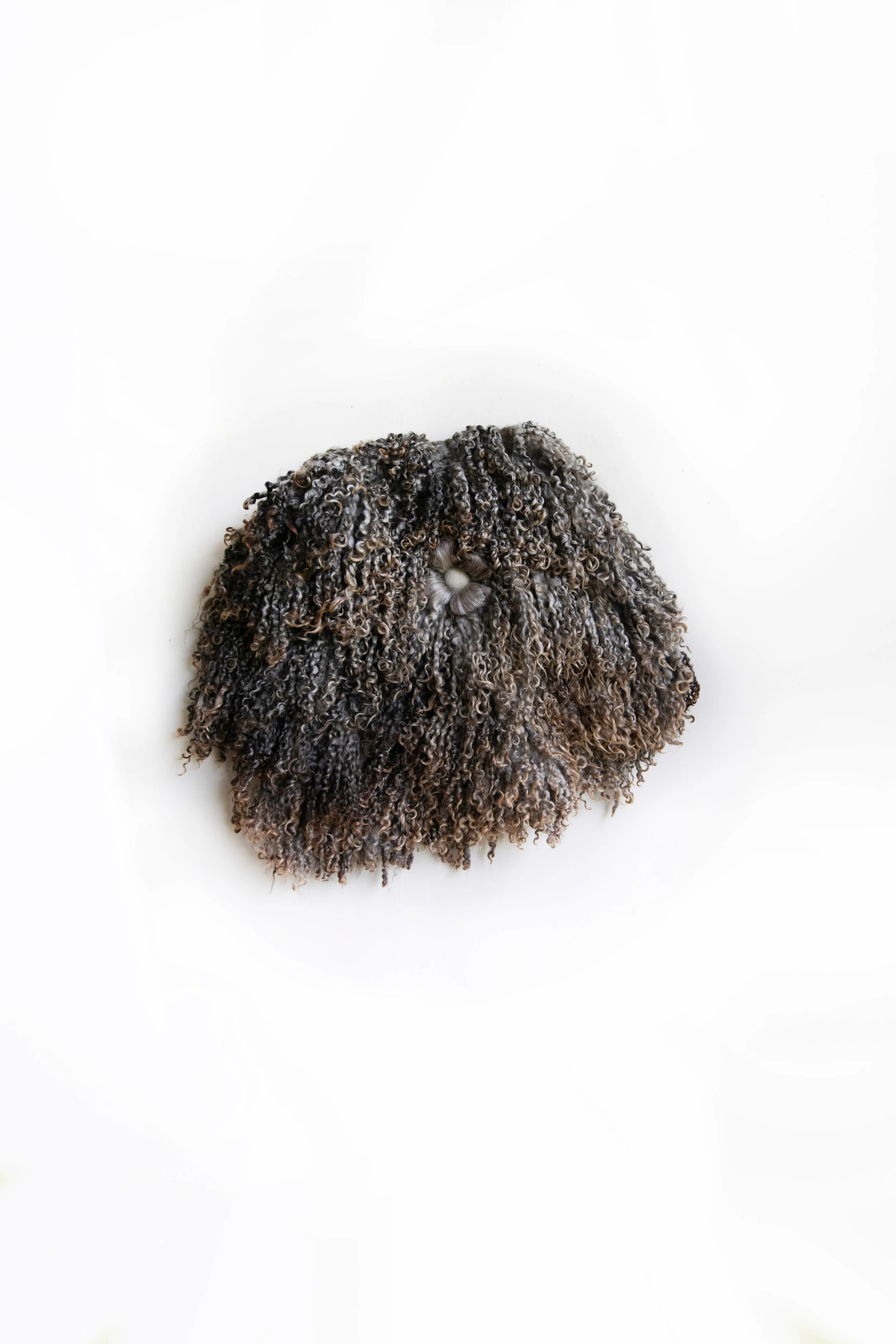

Sterling Silver Teeswater Fleece
Sale Price:
$300.00
Original Price:
$350.00
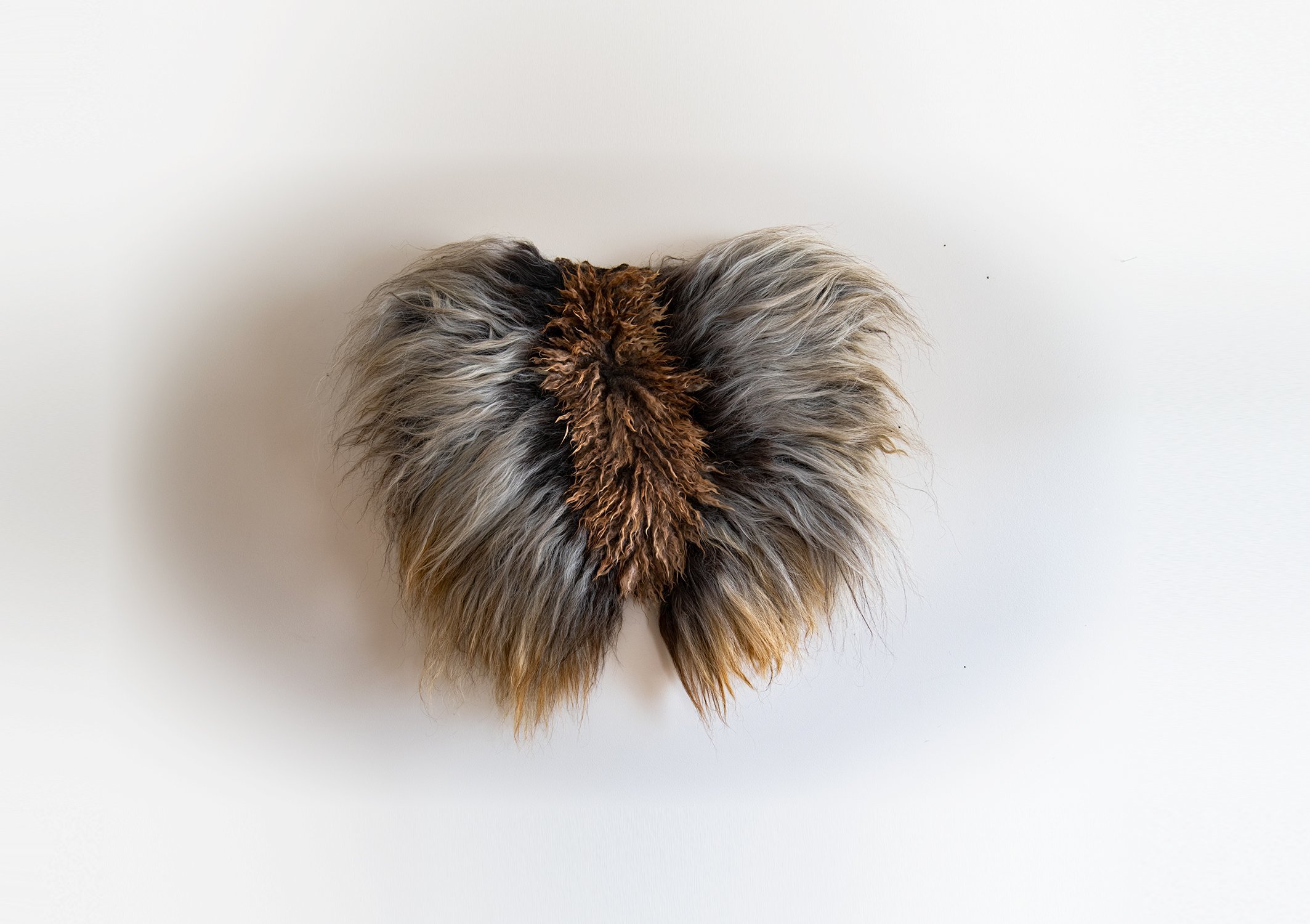
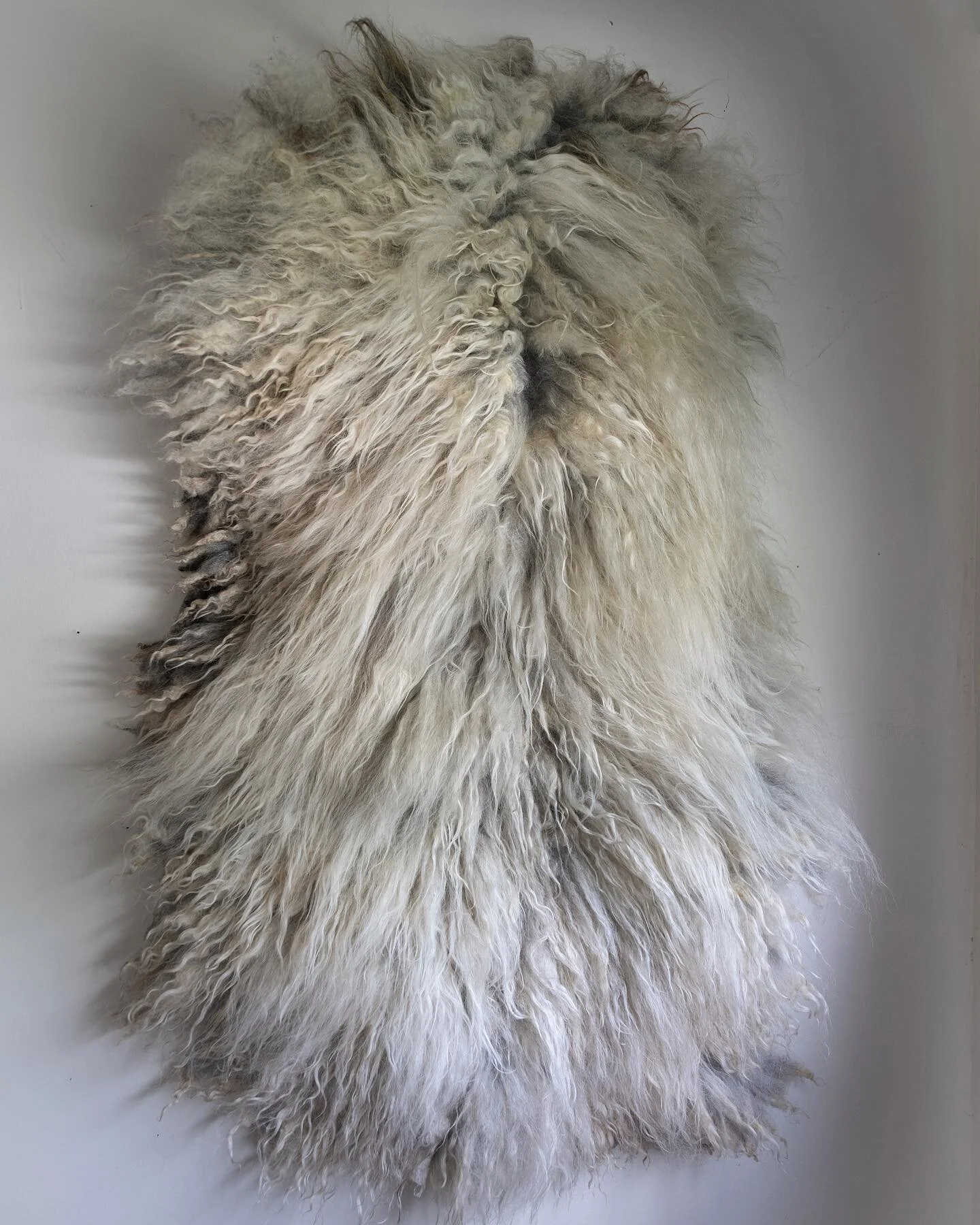
Silver Teeswater fleece with long dramatic curls. Backing material is gray shetland wool.
This lustrous fleece feels truly luxurious with it’s silky long locks!
Size: 2.5 × 2 Feet (measured by fleece side - not backing material).
Teeswaters are considered an endangered breed. More can be read via The Livestock Conservancy below.
The Teeswater sheep breed was developed in the Teeswater region of England. In the 1920s the breed was faced with near extinction. The lustrous, low-lanolin, kemp-free fleece of the Teeswater is appreciated by hand spinners for its staple length and fine, long curly locks. Fiber growth is up to one inch per month with little to no cross fibering. Teeswater sheep were imported to the United States in the 1800’s but lost popularity due to importation of other long wooled breeds.
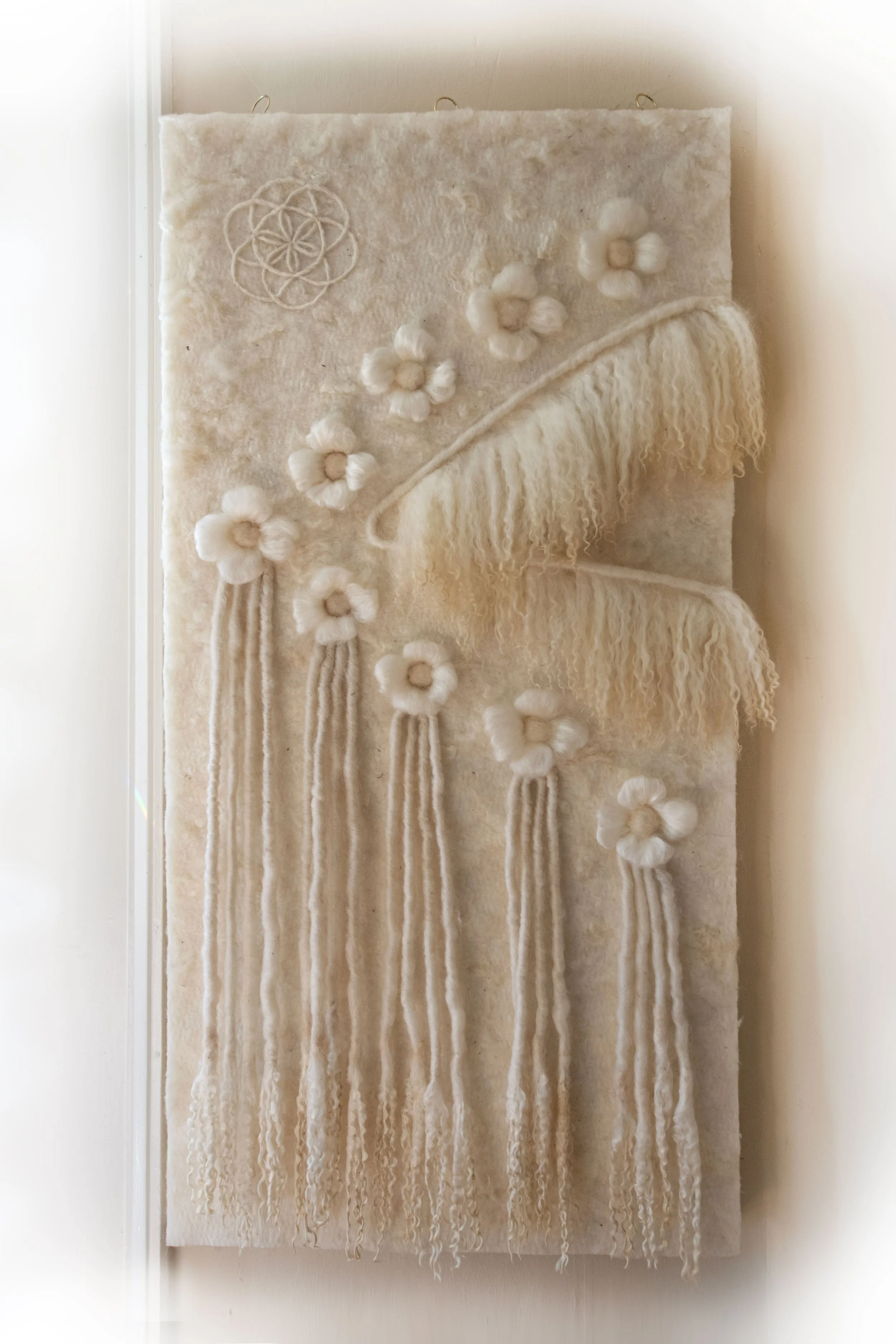
Wool Wall Hanging / Rosette
$1,000.00
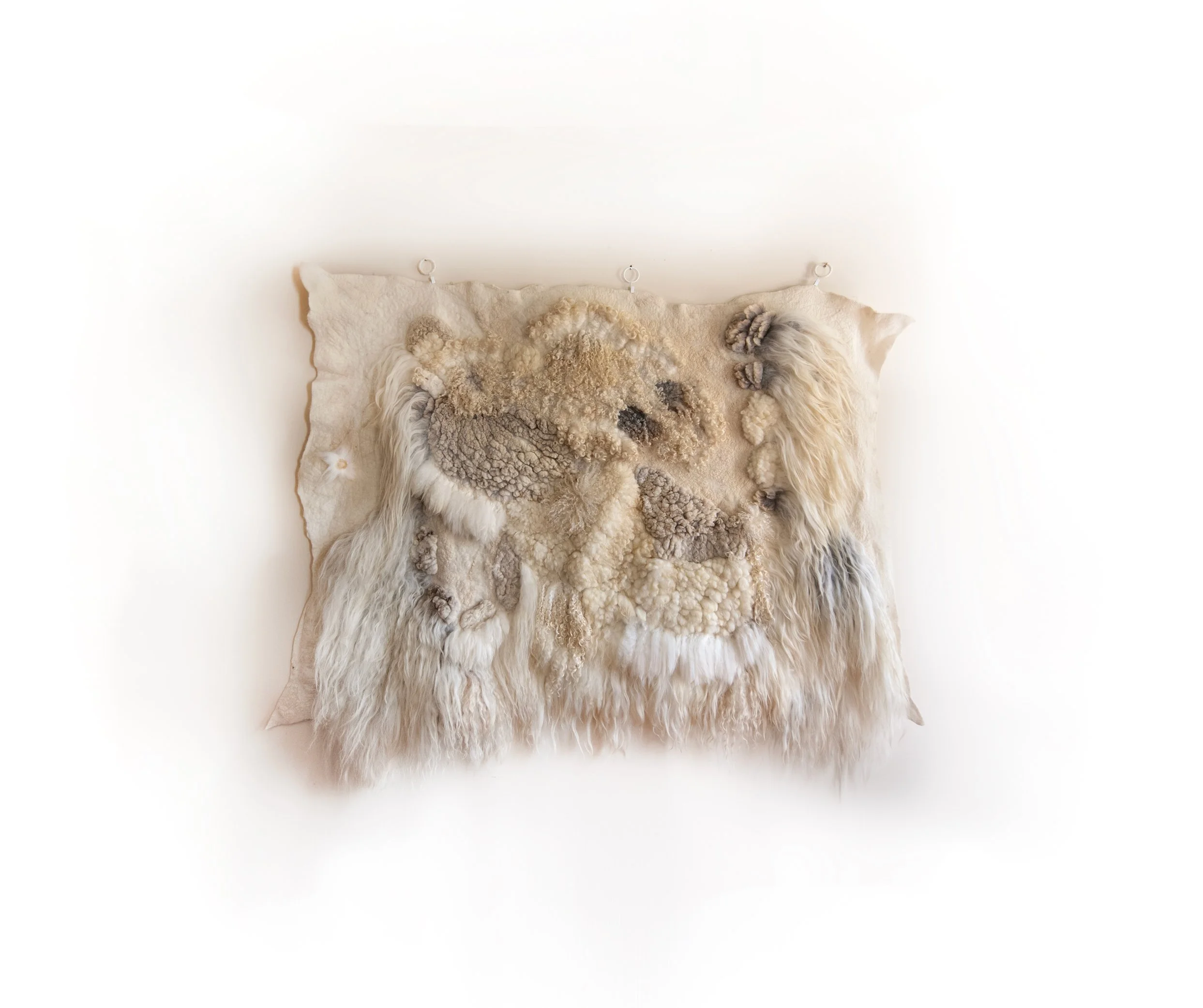
Embellished wool acoustic panel. Size: 2 feet by 4 feet (2 inches thick)
Materials: Valais Blacknose and Teeswater fleece, Peace Silk, Mohair
The six-petal rosette (also known as a hexafoil) is an ancient geometric symbol formed by overlapping six circles within a larger boundary. Revered in sacred geometry, it is the foundational building block for complex patterns like the Seed of Life and the Flower of Life. Dating back to the Bronze Age, the symbol appears globally in Celtic, Egyptian, Roman, and early Christian art. It has historically served as a protection symbol for the home.
More acoustic panel information below.
Eco-friendly, non-toxic, and stylish, wool acoustic panels are perfect for homes, offices, cafes, classrooms and studios.
Filters VOCs and other indoor air pollutants naturally
Renewable, biodegradable, sustainable, non-toxic
Reduces echo and improves acoustic comfort
Helps regulate moisture in a space
Wool naturally resists mold growth
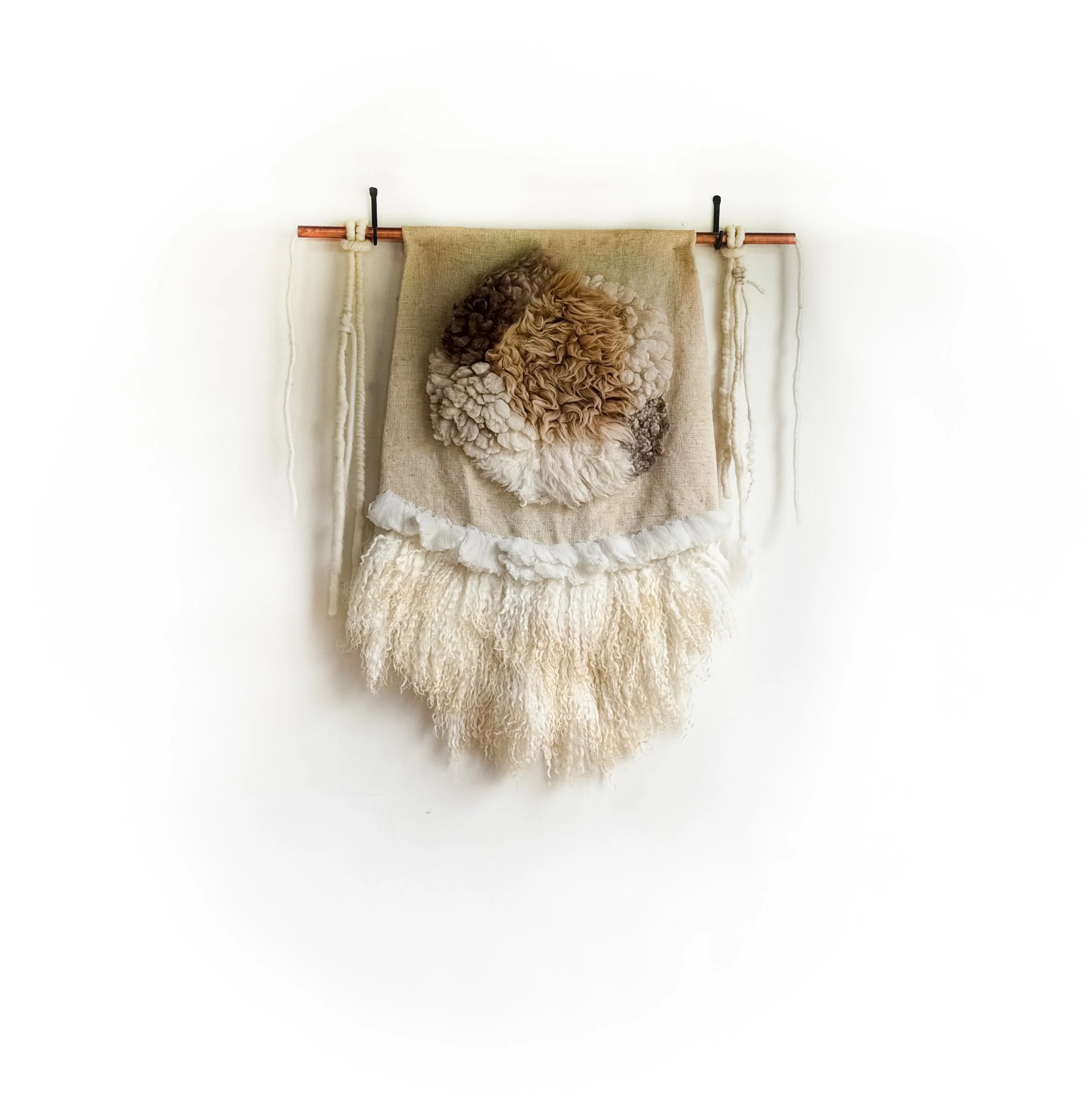
Desi Wool Wall Hanging
$2,000.00
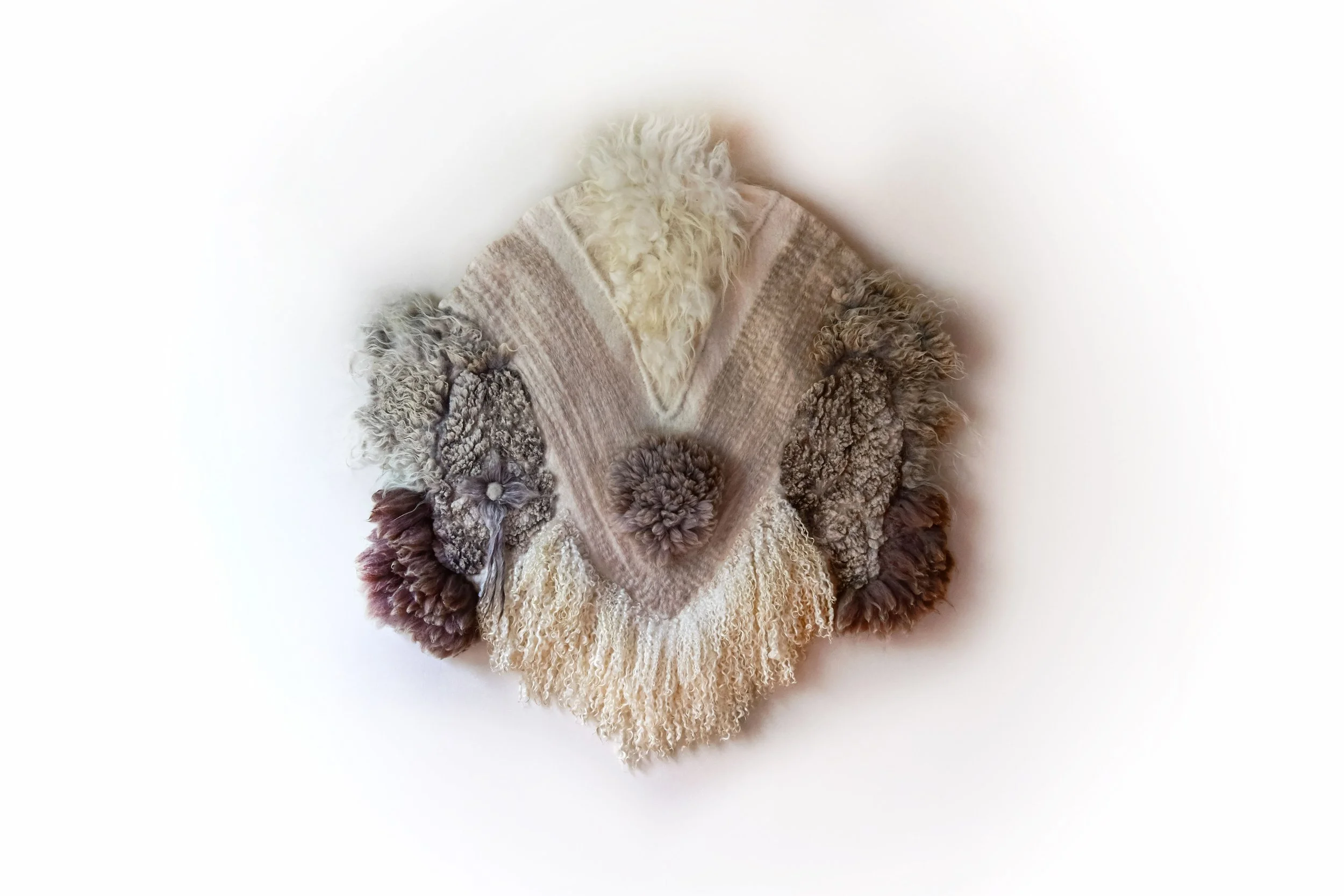
Fiber from my own flock, as well as Valais Blacknose, CMV/Romeldale, and Alpaca needle felted into Desi Wool cloth (imported from Kachchh, India via Handa Textiles).
Copper dowel is 3 feet wide.
More about Desi wool via Handa:
The nomadic pastoral herders of Kachchh, India are known as Maldharis, they have been in co-existence with the native desi sheep for centuries- walking together for months across the country in search of pastoral grazing lands. They provide fleeces for a cooperative of artisans who wash, handspin, dye and weave the yarn in their villages.
This desi wool is handspun - a ‘natural’ (undyed/unbleached) yarn held with a fine warp of the local indigenous ‘kala’ cotton. which gives it a slightly smoother finish than is typical to the rough desi wool.
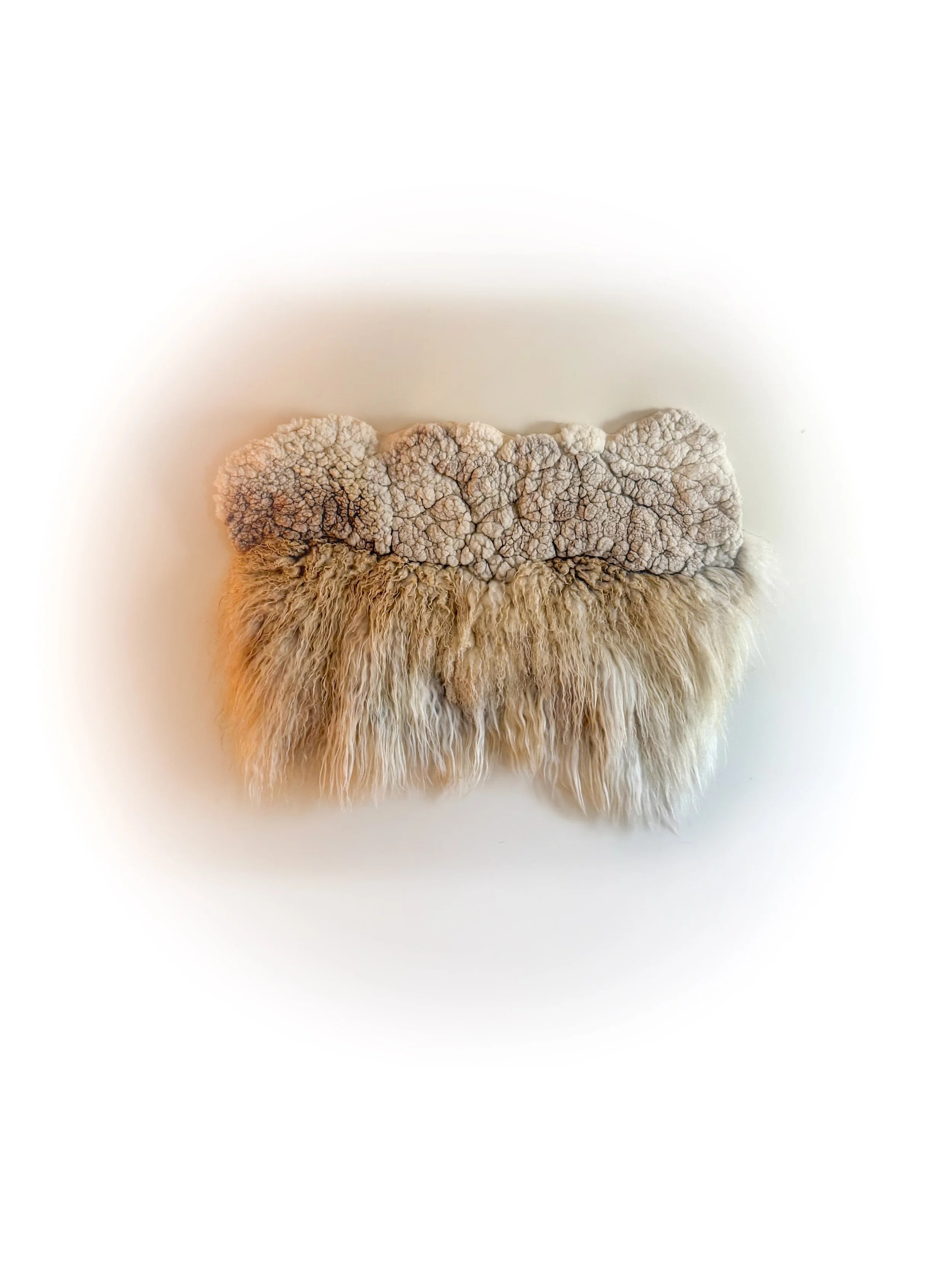
A sustainable sheepskin alternative
Sheep have been domesticated and bred to produce thick, heavy coats that do not shed. This means they rely on farmers to shear them annually. We take the raw, dirty fleece from their annual haircuts and piece it back together using various felting techniques. Traditional pelts have leather (skin) on the back of the fleece. Hence the name sheepskin. These are dead animals. No animals are harmed via our method of production.


Jess Ludwicki is the farmer and fiber artist behind Love Lamb. Her studio is located in Hamden, New York.








Learn more about the rare & heritage breeds we work with and love via The Livestock Conservancy.
